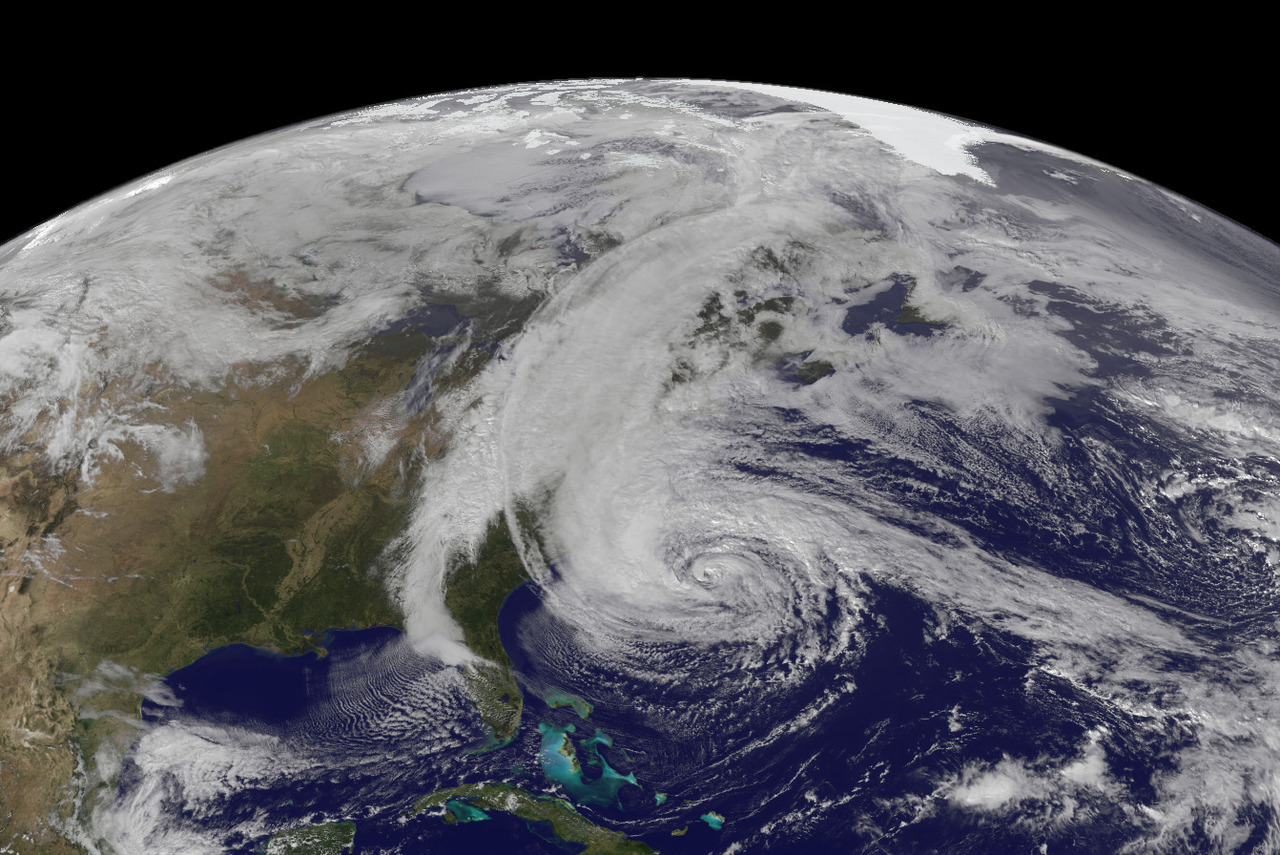
Today our thoughts are with the metropolis as Sandy's devastation becomes clear. The day after is always the hardest, I think - the adrenalin is gone, the insurance paperwork is out, and neighbors face the reality of work - normalcy - by Monday.
This is my least favorite day because it's when we turn our lives into dollars. How much will it cost? Who will pay? What amount can the government afford? Why rebuild [insert expensive thing] at all?
As always during emergencies, when things that we think are permanent or reliable are no longer so, communities solidify. I hope we can be that solid community for each other.
Over fifty reported deaths so far. Nurses carrying infants down nine floors in the dark. 80 destroyed homes. Landmarks and memories washed away.
Here in New Orleans we are enjoying a ridiculously beautiful week - cool winds, clear skies, and the smell of rarely-used fireplaces as everyone gets their costumes ready. How heavy can our hearts be for our neighbors whose suffering we have shared?
I encourage you to have interstate compassion. Continue to check online sources that carry your thoughts east to Gotham.
And whatever you do, do not let anyone reduce a person, a life, a community or a network of relationships, to a dollar amount. Compassion is realizing that everyone has has someone who they would move mountains for, and that moving mountains for each other is the business of a global community.
Wednesday, October 31, 2012
Monday, October 29, 2012
Interviews
You know that I've been writing about the evolution of spirituality and meaning. Lots of statistics, lots of theological research, lots of reading colleagues. But I've been a bit lax with interviews. No more!
Today I'm restarting interviews. Here are some of the questions I want to ask:
I hope these topics will lead to long, open conversations about how people find meaning in their lives, where religion fits into people's thoughts, and the role different rituals play.
What would you ask? Use comments to reply, or just facebook me. I'd love to hear from you, even if we can't have a coffee in person.
Today I'm restarting interviews. Here are some of the questions I want to ask:
What are some things and activities that are important to you?
What motivates you to do those things?
If you could do more of something, what would it be?
What prevents you from doing that?
What I say "God" you think...
When I say "Religion" you think...
I hope these topics will lead to long, open conversations about how people find meaning in their lives, where religion fits into people's thoughts, and the role different rituals play.
What would you ask? Use comments to reply, or just facebook me. I'd love to hear from you, even if we can't have a coffee in person.
Sunday, October 28, 2012
Sunday Prayer
I like this one for two big reasons. For one, Chavez is someone we know. He worked near where we live, with people we know of. He is not an abstraction, a statue in a garden with little deer and birds around. He suffered in tangible ways, with tangible results.
Also, this Chavez prayer is more human somehow, I think. No mention of a heavenly lord or master. Dawkins could pray this, honestly, for the equality of persons, and the subjecthood of the planet.
Show me the suffering of the most miserable;
So I will know my people's plight.
Free me to pray for others;
For you are present in every person.
Help me take responsiblity for my own life;
So that I can feel free at last.
Grant me courage to serve others;
For in service there is true life.
Give me honesty and patience;
So that I can work with other workers.
Bring forth song and celebration;
So that the Spirit will be alive among us.
Let the Spirit fourish and grow;
So that we will never tire of the struggle.
Let us remember those who have died for justice;
For they have given us life.
Help us love even those who hate us;
So we can change the world.
Friday, October 26, 2012
Roots and Money
![]() |
| cities can isolate us from our context - the planet |
That oversight will kill us - literally and spiritually.
So why do we mess this up?
Let's get back to basics, to the root of the problem (the root like a radish, radical). The root problem is that it is easier to see the world as us/not us :: subject/object. We objectify other people, groups of people, animals, and everything that is outside us. We turn our surroundings into objects, things that are only valuable insofar as they are valuable to us.
| the drone fatality app |
Humans are treating the planet like it's the Soviets in the 60s.
And that's really dumb. It's dumber than the cold war.
In the cold war we could say that this other group were people like us, not demons or strangers, and we could relate to them. In this case we are part of the planet. We are living things made from carbon. We are filled with bacteria. We are the planet as much as moss or lava or atmosphere.
When we fail to relate to the planet, we fail to understand ourselves.
What's the radical, root solution?
It almost definitely has to do with $$MONEY$$. Money is how we turn subjects into objects, and objects into numbers. Money is how we measure the worth of things relative to ourselves. Money is the high that keeps us addicted to objectification - rewarding us when we objectify really really well.
The first step to being better at relating is understanding our personal relationship with money.
Do you know the point of your money? Do you know the source of your money?
Wednesday, October 24, 2012
Debunking People in 3 Steps
I'm on a bit of a three-step kick this week.
Anthropocentrism is the point-of-view in which people are made central. For example, a zoo is built around people, not animals - anthropocentric - whereas a game preserve is built around the animals, and people who want to see them are an afterthought.
Let's confront the facts of our world - people are not central to our planet, even less our universe. Quite the opposite. The planet is happy to buck us off like a bad cold.
But there's another side that calls for a balanced perspective on humanity's place in the universe. We are part of the planet, we will work to survive here, and we are unique organisms. This is what Thomas Berry might call the Ecozoic perspective - humans thinking of themselves in an intentional balance as part of a larger planet.
This is key to our spiritual life, and not just for our survival. Our connection with our planet is perhaps the most powerful relationship of love we can form. Any imagination of relationships of love must take into account the natural context. Can we talk about mideast peace without talking about natural resources? Can we discuss our imperative to feed the hungry without talking about the root causes of hunger?
I'm a visual learner, so here's 3 Images to help shape your perspective.
1) Abuse: This is the Yangtze River in China, a major global artery of fresh water. It turned red for as-yet-unknown reasons. Maybe a paper dye? Maybe a chemical runoff? What we do know is that it wasn't hard for me to find a picture for this category. Humans have been cavalier with our planet, which has bent to our wishes. Mountaintop blasting, ocean dead zones, ozone holes, and apocalyptic deforestation worldwide have led us to a point of no return. We got the planet into a mess, and if we are going to survive, we must appreciate the fact that we are part of a larger context of living things.
2) Recovery: I say that we might not survive, that the planet will kick us like a fever, and this is what I mean. This is Detroit, photo by Andrew Moore. You've seen Chernobyl images, surely. The planet doesn't need us. If we die out the planet will continue spinning, weather will continue to form. Living things might still thrive, like they did for the millions of years before we started walking upright and collecting into towns. The planet will recover from us, that is a fact. By forming a balance with our natural context we aren't somehow saving the planet, we are saving ourselves by connecting with the planet.
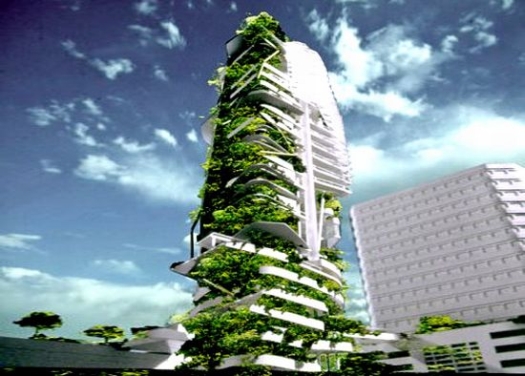
3) Shape Up: I am proud that New Orleans is at the cutting edge of urban farming, and that vertical farms - buildings that grow large amounts of food in urban environments through hydroponics - are currently being built in Chicago and New York. The future of humanity rests in our ability to recognize that we are part of a planet much bigger than us. That's easy to forget in a city, where everything around you is man-made, and you might not see naturally occurring plants for months. Making the city more green exposes more people to our balance with the planet, and a city willing to devote itself to that cause is a city that understands. New Orleans is that city because we are falling of the edge. We know that our planet will spin us off if we don't embrace it with both arms.
Monday, October 22, 2012
3 Steps to Connecting
Beautiful skies, meteor showers, and cool temperatures help us think of the planet this time of the year.
Now, with our human loved-ones, we connect by acting on our thougths. I thought of my friend today, so I called him and we met up. When my mom thinks of me she writes me an email. Neither my friend's hangout or my mom's email have a point other than to connect. Thought turned into action turned into connection.
How do we do that with the planet?
Well, first step, we think about the planet. We put ourselves into a mindset that helps us remember our planet - planting trees and gardens, visiting animals, getting out of the city, looking up at the sky. Habits like these are like going to book club, or keeping a birthday calendar - anything that reminds us to make room in our busy day-to-day for something else. We do that for our people-friends, why not our planet-friends?
Next, we have to engage in some action. I think of my friend and post something on facebook to them. Maybe I get my hands dirty in the garden, or go for a hike out of town or in a botanical garden. At the very least we can look up at the sky for a few minutes, or even admire some beautiful pictures while we're at work.
At last, we form connections. I would do anything for my friend, and he helps me grow, too. Our connection is good. If we think about and act with our planet, we will develop a connection with the planet. And, frankly, if we don't have that we have a very limited life.
Our planet is our richest, boldest, most exciting friend. How can you facebook friend it?
Now, with our human loved-ones, we connect by acting on our thougths. I thought of my friend today, so I called him and we met up. When my mom thinks of me she writes me an email. Neither my friend's hangout or my mom's email have a point other than to connect. Thought turned into action turned into connection.
How do we do that with the planet?
| I love a good botanical garden - NYC |
Next, we have to engage in some action. I think of my friend and post something on facebook to them. Maybe I get my hands dirty in the garden, or go for a hike out of town or in a botanical garden. At the very least we can look up at the sky for a few minutes, or even admire some beautiful pictures while we're at work.
| maybe not a good model for connection |
Our planet is our richest, boldest, most exciting friend. How can you facebook friend it?
Sunday, October 21, 2012
Sunday Prayer
Video Edition! All these videos together will take you less than fifteen minutes to watch.
I'm thinking about our place in the world. I know some people who can help...
Carl Sagan on how our world doesn't need to conform to us:
Alan Watts on apples:
And Thomas Berry on the Cenezoic Era:
(remember that waves are the sound of the planet we are on spinning on an axis, and go to the bathroom.)
I'm thinking about our place in the world. I know some people who can help...
Carl Sagan on how our world doesn't need to conform to us:
Alan Watts on apples:
And Thomas Berry on the Cenezoic Era:
Subscribe to:
Posts (Atom)