Thursday, May 31, 2012

Best and Worst Theology Words


Over roasted garlic and wine, I had a thought with my wife's book club (my book club?). We discussed in a previous post that, when we move forward from religion, we should take a few things with us. But I don't mind losing other things, especially some of the ridiculous verbiage that comes with theology studies. 

So let's see some painful words, and pretty handy words from theology.

8 Cool Words for Big Ideas
Cariognosis experts
1. Cardiognosis: knowledge of the heart, in the sense of knowing the intentions or feelings of someone else. This isn't really possible, I think, unless you're on TV. But I suppose I would like to know the true interior life life of others people. Is this a good word to keep?
us military code of ethics
2. Casuistry: the resolving of ethical problems through strict adherence to guidelines. What a gross word for a legalism and rationalization. It's a gross and redundant and old fashioned word for a nasty thing. Call it by its name!

don't want this...
3. Concupiscence: a desire for something that we don't really want, or shouldn't want. This is the cornerstone of Christian ethics - that our natural pull towards the good has to compete with an equally natural instinct to contradict the good. I'm glad there is a word for this, even if it's a hard word.

WTF, Jesus
4. Apocrypha: in theology, the 'hidden books' : writings that are quite ancient, but not used in liturgy or tradition because they are unorthodox, are anonymous, or fanatical. In common usage it means anything outside the reading list, or anything outside the orthodox timeline. I like this word better than its cousins, Deuterocanonical and pseudepigrapha.

second coming in style
5. Eschatology: the study of last things, especially the end of the world or salvation, but with a positive connotation. I like this word a lot - I wrote about 'the eschaton' before, and I appreciated having a word for "the apocalypse in a good way". I also used Parousia, or saving presence (in terms of the second coming).

scholarship!
6. Exegesis and Hermeneutics: critical interpretation in a scientific, direct way; and interpretation based on a body of principles. Usually used in terms of scripture. I don't think I'll make friends at a cocktail party with these, so how about just criticism.

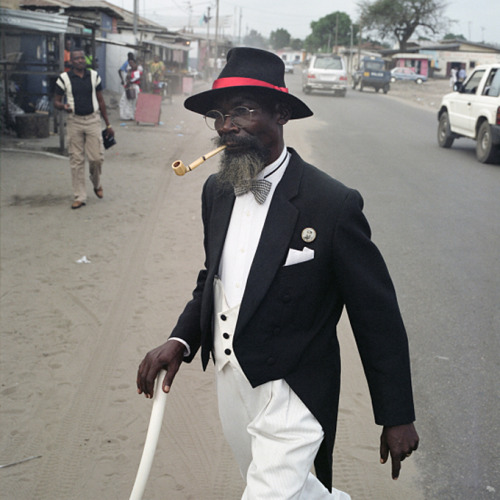
Authority Statue!
7. Magisterium: the Church's juridical branch that demands obedience (as part of the spirit-empowered hierarchy). Sometimes used interchangeably with Curia or simply the Vatican. While I would be happy to see the institution go, I think it's a cool word for any powerful judicial/educational force, like the Supreme Court.

A turn towards Fasion!
8. Metanoia: change of mind, change of attitude, especially changing towards the divine.Turn to the stars.


Tuesday, May 29, 2012

Corruption, Crisis, and Compassion

Sitting at the coffee shop, I read for a detailed account and reflection on the Vatican scandals. Sit and enjoy a peach danish with me in the air conditioning, and let's see if we can get less angry.

Corruption.
You've seen this in the news: the Vatican has been slowly opening its finances so as to belong to various Interpol and European financial networks, and a few leaks have broken them open even more. No matter the identity of the mole (probably not Paolo Gabriele, the butler) the world now knows the extent of financial and doctrinal corruption in the Vatican.

just a little secretive
The Vatican gives the impression of being infallible, a walled fortress of orthodoxy. Until now its interior workings - departments like the Pope's household, or the massively influential financial sector - were a mystery to everyone but experts and insiders. But combine the Vatican's desire to participate more openly with the EU as a nation, a series of document leaks, and intensified scrutiny following controversial stances, and we now see inside the wardrobe.

Crisis.
The sunlight is disinfecting the ark spaces of the Vatican. More than a few firings that seem to have been overdue make me wonder, "What else are we missing?" and, "Is there much more?" It seems that the Vatican is essentially a tax haven and mafia money laundering enterprise. I don't think that inspires faith or loyalty from our community. No, I think that there are real reasons to be very irate at our leadership.

In the meanwhile we are being asked to remember 'obedience' and 'humility' as our leaders in the US get more aggressive on controversial topics like birth control, health care, and justice for victims of abuse. And less than a year ago we were forced into an unpopular new old translation of the liturgy. I think Catholics in the US of all ages are at the breaking point.

Compassion.
Let's not be unkind, though. Criticism is fair in this case, since we have faith in an organization that is not trustworthy, and it can become better. But Criticism must not turn into Judgment and Condemnation. Fair criticism must come with compassion.

Compassion is the recognition that I, too, have failed in similar ways. The same demons and faults and shortcomings that led to this failure are inside me, too. Empathy is the heart of the Christian message - not corruption, not scandal.

Jesus punches money in the mouth
It's worth mentioning that the Vatican does not formally hold itself to be Camelot. Everything from the Vatican should be treated like Roman driving rules: idealistic, not realistic, and it's okay to break the rules. You will hear Vatican spokesmen talking as if this is to be expected, like any human organization (in the unlikely event that they talk with us at all). But we shouldn't let the Vatican back out of this mess. We do expect more from the Vatican, and these scandals are serious and systemic. We as the Church deserve an organization that works with the same wholeheartedness with which we serve. The Church must follow the Spirit, must follow Christ who turned over the money tables.


Even if that's an unobtainable, heavenly ideal towards which we are working, it is the Church's responsibility to show us the way, not to show us what not to do.

Saturday, May 26, 2012

Come, Spirit of Pentecost

Happy Pentecost.
Today Christians celebrate the inspiration of the Holy Spirit. According to the record of the early church, the Acts of the Apostles:
1 Now when the day of Pentecost had come, they were all together in one place. 2 Suddenly a sound like a violent wind blowing came from heaven and filled the entire house where they were sitting. 3 And tongues spreading out like a fire appeared to them and came to rest on each one of them. 4 All of them were filled with the Holy Spirit, and they began to speak in other languages as the Spirit enabled them. 5 Now there were devout Jews from every nation under heaven residing in Jerusalem. 6 When this sound occurred, a crowd gathered and was in confusion, because each one heard them speaking in his own language. 7 Completely baffled, they said, “Aren’t all these who are speaking Galileans? 8 And how is it that each one of us hears them in our own native language? 9 Parthians, Medes, Elamites, and residents of Mesopotamia, Judea and Cappadocia, Pontus and the province of Asia, 10 Phrygia and Pamphylia, Egypt and the parts of Libya near Cyrene, and visitors from Rome, 11 both Jews and proselytes, Cretans and Arabs—we hear them speaking in our own languages about the great deeds God has done!” 12 All were astounded and greatly confused, saying to one another, “What does this mean?” 13 But others jeered at the speakers, saying, “They are drunk on new wine!” (Acts 2:1-13)

I love this image of scared friends being suddenly so filled with inspiration that they erupt with goodness and truth for everyone. The visual image of a 'tongue of fire' gives me chills, even though it's the narrative equivalent of first generation CGI. Remember that most of the imagery related to the Holy Spirit is meant to represent knowledge, particularly hidden wisdom (fire, heavenly doves).

And I love this feast day. It is an essential part of the Church's story - this is where church leaders trace their ability and right to deliver truth. More importantly, Pentecost celebrates and affirms the idea that we are important enough to have our own tongues of fire! We get some truth - yay!

Avoid getting drunk on new wine.
The story of Pentecost is super affirmative, but it carries a backspin. Yes we get some truth, yes we get to talk about it to everyone, but it still comes from somewhere else. Pentecost reminds Christians - the Church - of their relationship with the Holy Spirit: The Spirit leads, Christians follow.

When you get over the initial shock, I don't think this is such a bad sentiment. Some sense of humble obedience can help us remove ourselves from the driver's seat and affirm that we do not really control our own destiny. We begin to accept the truth that we exist in a vast, mysterious universe. We recognize that our wisdom does come from outside ourselves, and we remember that we always learn from a stance of humility. Likewise, when we teach, we cannot wholly take credit.

Most importantly, Pentecost reminds us to stay vigilant, to follow the Spirit of Truth, recognize the reality of the universe outside ourselves, rather than assume that we ourselves are truth, or that reality bends for us.  We are bound to reality, reality is not bound to us.

Just a side note: Remember, Christians, the Holy Spirit does not endorse us. It us up to us to find the Spirit wherever the truth lies, and to endorse it. We are bound to the Spirit, not the Spirit to us. I think Benedict's beautiful prayer could have used more of this humility.

Friday, May 25, 2012

4 Reasons to Like Your Religion

First, why I beat up on religion.
Hey everyone. I've been beating up on religions a lot because I'm pretty disappointed. I think the  organization that I like - roman catholicism - has been accentuating the negative and eliminating the positive lately. That's what I like to write about because that's what I feel, and other people my age (all ages) seem to share my dissatisfaction.


I do like some aspects of the religions. Four aspects of religion keep me coming back, and in the eventuality that we give up on religions, I think we should take these four with us.


4 Reasons to Like Your Religion

1) Rituals.
Papa Legba?
Religions are chock full of rituals, or so they say, but do we even know what a ritual is, or why it's there, or what it's supposed to do? Some rituals are rumored to turn common foodstuffs into meat and blood, others gird us for an iron-age road trip, and some even turn normal Haitian folks into hyper-hipsters. 


A ritual is an action that carries a secondary meaning; which is to say that the action connects us through space and time. SPACE AND TIME!!!!!


For example, setting off fireworks on July 4 is an American ritual. We do it together all over the country, and have for decades; in fact, it marks an event over two hundred years ago. So when I set off roman candles in the driveway, I'm not just irritating neighborhood dogs by myself. I'm connecting with a big group of people, that is connected over a continent's worth of space, and about two hundred years of time (and into the future, too). SPACE AND TIME!!!!


Religions have rituals that are usually connected to some moral or historical lesson, but they aren't meant to be lessons or teaching aids. Rituals are meant to be experienced. It's the act of experiencing something out of routine in connection with the whole community worldwide and through history that's supposed to move us. 


In the future I hope that, if we aren't doing ritual things at altars inside of churches, we remember to connect ourselves to each other through these funny actions. Even if it's just carving a turkey every year, setting off fireworks, lighting a candle, or wearing a Trayvon hoodie. 


2) Prayers.
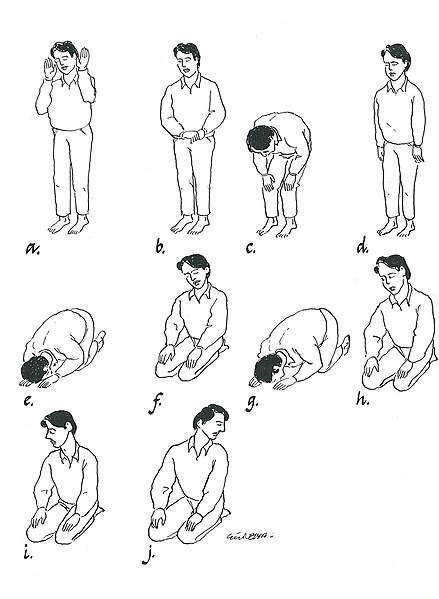
proper form for the Salah
 That's right - in a world without religion, I would still want to pray. A lot. At the core, any kind of prayer is about communicating with another: "The Other". Communicating with God means crossing the barrier between the ordinary and the extra-ordinary, between the me and the other.We are 2 for 2 on things all religions agree are important, because prayers, like rituals, are found across the spectrum. All religions want to promote us communicating with the gods, or God. 


Like rituals, prayers are about connecting us. In this case, prayers can help us pull out of our everyday concerns and think about the big picture - think about ourselves from the point of view of "The Other". That's great to practice, and I recommend practicing it before meals, when first waking up, five times daily with everyone around you, or even without ceasing.


Whether you believe in God or not (and statistics show that most people leaving religions do believe) this is great practice for communicating period. Any communication is with "An Other" - another person, people, or with our environment. 


In the future I hope that we keep placing central importance on communication. 


3) Guidance and Community.
Nearly 4 million entries. In English.
Religions are chock full of tools to guide us: texts, leaders, sages, doctrines, histories, etc. But this is a key place where religions have fallen down. Today we get guidance from all sorts of sources, and even opensource projects like Wikipedia have proven themselves as mostly reliable, not the pit of vipers that naysayers thought they would be. Meanwhile, religious sources of guidance have failed to keep up in terms of content or delivery. Not many people going to traditional Bible studies in the church basement anymore. The attempts to modernize might be too little, too late. 


But we should continue to call 'Bullshit' when we see it. I think that the internet has made us better judges of content, not worse. Sources of inspiration and guidance are better now - and more available, and more specialized - than they were before. 


Also, with our new self confidence and networking, we aren't in need of local communities like we were before. Religions in American boomed in the Eisenhower years, and the number one reason to become a member seems to have been the community (not rituals or doctrines or histories). Where do the Jones' go? Religious organizations still rely on this, but our generation doesn't seem to be needing this from them anymore. We like guidance, and we like community, and we like being guided together. We just don't like church basements, or bleachers.


'where two or three thousand gather in my name...'


In the future, I hope we continue to be guided by experts who we trust, together. 


4) Wonder and Awe. 
St. Peter's makes you feel so tiny!
This one is my favorite. Basically, when you are in a religion, you are constantly humbled. Religious architecture is built to humble you, and so are the sweeping thoughts of God's omniscience. The end result of all this grand Gothic architecture is that we take a stance that the world is a pretty marvelous place, and that we are really small. 


This is actually true, it turns out.World is friggin massive, we are not very big. Stone-age people thought this when they looked at the night sky, and their/our religions remember it.


But without a religion throwing God at us, we can fall into a people-centered mindset, that blinds us to our actual place in the cosmos. Or else we forget that we are a full, card-carrying member of the cosmos and fall into nihilism.  


I think that modern science is doing a good job humbling us, with projects like the Hubble telescope and the Hadron Collider. They make good television, too, and we seem to be pretty into it. 


I hope that in the future we keep a sense of wonder and awe about the universe. 


NOTE: I'm thinking of pairing this sort of text with my research data in the form of a ten-ish page book, as keystone content available for download. Because I love you. Would ya'll be into that? email me or comment.


Wednesday, May 23, 2012

Those Damn Nuns


The basics.
The Vatican, via former San Francisco bishop Levada and archbishop Sartain, is investigating the US umbrella organization of women religious. The premise is that American nuns are not emphasizing certain Vatican positions while stressing other less orthodox teachings, and that they are not formally connected to the USCCB.

Cardinal Levada
Why is this relevant, in any way?
Because of their thousands of schools in the country, women religious are a major voice in this country's religious conversation. And they are really the only big voice talking sensibly about women in the church. As the US bishops grow more single-issue around abortion, women religious are really a bright, alternative light.

So if you want to hear a more progressive diversity of voices, you better like some nuns.

At the heart, organizational issues.
Let's look at those positions later; first we should mention the structural implications if this process.
Men and women religious are organized under a hierarchy that is independent of local bishops. Each individual vows obedience to his our her superior, along with the vows of poverty and celibacy. For example, each Ursuline nun answers to her superior locally, who then answers to a national organization of Ursuline sisters. That national organization sends delegates to a national leadership conference. The national conference, as well as the Ursuline order internationally, is obedient to the Vatican. So you see how they sort of skip local bishops.

The Leadership Conference of Women Religious - LCWR - represents about 80% of 68,000 women religious. They have regular meetings, mission statements, educational conferences, etc. They also oversee hospitals and schools run by member nuns.

In general the LCWR works collegialy, with a sense of democracy and sisterhood. However, the USCCB, and the Vatican, tend to operate hierarchically, with a firm sense of centralized control. The Vatican is at the climax of about two hundred years of centralization that has reduced the independence of bishops and other religious leaders, like the LCWR. The LCWR has sought transformation for over 40 years, so this current action is part of an ongoing chafing.

This has had the advantage of enabling the organization to operate with a level of independence from local turmoil, be it ethnic cleansing in the Sudan or American politics, so they can speak truth to power. It also consolidates some of the brightest minds on spirituality and theology, producing some really landmark works.

But when the hammer comes down it can really aggravate local leaders. And the centralized leadership is all male, quite old, and disproportionately Italian, so there are a lot of (potential) biases. US Catholics in particular tend to be more progressive than the Vatican, and there is even talk of an American Catholic Church schism.

Add to this Benedict's clear intention to further consolidate power through the bishops he has selected in traditionally progressive areas, plus a certain pastoral insensitivity on sensitive issues like homosexuality, the ordination of women, the child abuse scandals, and the Legions of Christ. 

The  objections, just a little ironic.
Based on this history, the outrage at the LCWR review should be no surprise. Not only will the nuns have to undergo total scrutiny for the second time in a decade, but the issues happen to be some of the most divisive around right now. And issues on which the Vatican has been particularly tone-deaf. Allegedly the LCWR hasn't done enough to insure orthodoxy concerning:

1) Homosexuality: the nuns haven't been condemning homosexuals well enough.
2) Women's ordination: many nuns have spoken and written publicly about women's ordination, whereas the Vatican considers the issue closed since 1994
3) Other Religions: Benedict's position is that members of other religions are gravely defective, but nuns continue to dialogue across religions.

I think the nuns are on the right side of all these issues. The Vatican has been criticized from all corners on all three of their positions here - from catholic universities, from bishops and cardinals, from monks and nuns. I mentioned earlier that even local priests in rural Louisiana have big problems with these. I have big problems with these.

These are not just emotional responses from a millennial American. These are valid positions of concern and disagreement. Even the Vatican has changed position on these issues in the last thirty years, moving to a more conservative stance.

The Vatican and Vatican-selected conservative bishops are squashing legitimate disagreement from independent voices in the Church, instead of engaging in dialogue. This will only lead to more schism, more people leaving the American church. These are just shades of Inquisition, the darkest hour of church history, that ended in the protestant reformation progressing.

-Andy

Tuesday, May 22, 2012

Welcome, Tiny!


My sister Jessie and her first son, born this weekend.

courtesy of morganowens


We don't know what challenges his generation will face. We can't teach him the answers to the questions he will ask. But we can instill in him a sense of creativity, joy, wonder and love, and I hope that will be enough.


Friday, May 18, 2012

Can't We Get Along?

We Aren't Selfish Animals.

For the last few decades, it's gotten popular to think of humans as selfish brutes, whose overriding motivation is to copulate and eat. Basically, dicks are perfect humans. 

some humans are more perfect than others...
 However, recently published research on early humans shows that one key to our continued survival is our ability to subvert any dickish tendencies for the good of the group.

In hunter-gatherer societies, rituals are put into place to make sure that the best hunters - who would naturally, genetically be more successful - shared the meat with the whole group. In isolated tribes today this takes the form of people other than the lead hunter distributing the meat. That's because we quickly learned that survival isn't all skill, it's luck. Even good hunters have bad days, and bad hunters have good days, so we are better off if we work together to get the food. This way we spread the risk. As any middle-manager knows, teams work together best when hierarchy, competition, and dickishness are minimized.

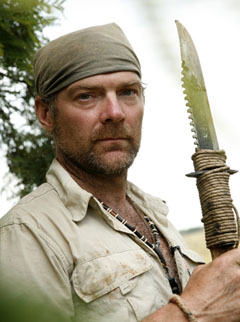
Les Stroud, Survivorman, had the solitary survival show that was cancelled. Coincidence?


Society is moving in the right direction.

Seriously - don't believe the naysayers and pessimists.We now work together as a species, and even as a planet, to achieve common goals and spread risk. Think of CERN, which physically crosses the border of France and Switzerland, and hosts hundreds of scientists speaking dozens of languages. And think of the Internet, which connects us across the country and around the planet. My sister is having her first child right now in Singapore, and I can be part of it through email, updates on the phone, and Skype. That is new to this generation.

Being connected and working together have defined humans for 250,000 years, or 10,000 generations. This generation is bringing us much closer than ever before.

Regardless of our prayer life, ritual practices, or spirituality, we're doing it - mostly - without the help of our religious organizations.

Go us!

-Andy