Wednesday, November 7, 2012

Interviews So Far

CC's on Magazine
I've been hesitant to post about the interviews, but so many people have asked, "What are people saying?" that I want to share. After nearly twenty interviews, some common threads have emerged.

If the interviews could be said to have an overarching theme, it would be the importance of relationships.

Most conversations have been with millennials - men and women born after 1984. Millennials have all been deeply interested in relationships - friends, family, networks, loved ones. They expressed this positively using words and ideas like a desire to be well remembered, trying to connect with people through art or music, being treated with respect and respecting others. They also expressed the importance of connections negatively through words like isolation, judgment, and expectations.

The few older men and women I've spoken with are split on the topic of relationships. One man did not mention relationships at all until I brought it up, and expressed that he "doesn't let anybody tell me what to do." This same man felt connected to past generations, however, with a well developed sense of reincarnation.

Fair Grinds is the most popular spot, btw

Another common topic - if only because we are meeting due to an online ad - is the relationship with the internet. Everyone valued the internet as a tool that can bring people together and develop communities, but everyone also fears the anonymity of the internet. The picture I put on Craigslist was directly responsible for many people reaching out to me who would not have otherwise.

I also noticed some very direct differences. While many respondants were goal-oriented, bringing up ideas like reaching certain accomplishments, others were more interested in flowing along, "like a river." Personally, as a goal oriented person, this surprised me. I guess I just have a goal-oriented (teleological) community around me, and had forgotten the joys of being open to the universe.

More to come soon! I have a number of unique, promising conversations scheduled this week.

Monday, November 5, 2012

Christ and Politics

Good Morning, everyone! I hope you are all registered to vote, and remember to visit the polling place on Tuesday.  I was not planning on writing a column endorsing Barack Obama over Mitt Romney, but this weekend someone said something that made my political leaning bubble over.

This election season has been a referendum on Roe V. Wade. Conservative candidates have distinguished themselves from each other by how thoroughly they would prevent abortions. Will there be exceptions in the case of rape, incest, or the life of the mother? Some candidates say, "No. I am principled, and ANY abortion is against my principle."

That might be a great strategy, politically. I don't know their constituents, and I don't know their supporters.

Here is what I do know: 

Todd Akin - Privileged White Neanderthal
A person who seeks an abortion is not happy about being pregnant. Their pregnancy might be unwanted because of the violence and trauma of being raped, or because they can not deliver a child while staying healthy themselves. Maybe they cannot financially support a child, or they do not have the support they would need to raise a child.

A person who seeks an abortion is suffering, and the cornerstone of suffering is isolation.

So when I hear a privileged, white, male neanderthal who has never known isolation talk shit about pregnant women, I change my vote.

This is not a Christian issue. The Gospels say that Jesus was isolated, suffered, and stood with the isolated and the suffering. Jesus healed  their physical ailment and their isolation. Jesus was not president of the rotary club, and his family was not well-connected. Frankly, the Gospels do not show a Jesus who taught us doctrine; Jesus DID things to relieve suffering.

To follow Jesus a Christian must feed the hungry, heal the suffering, or at the very least connect with the isolated. Christians must stand on the side of pregnant women.

This is a Government issue. You might say that it is not the government's role to relieve suffering, that relief in the form of healthcare, medicine, food, and education are better served by local communities of neighbors. As a white male with financial security, I am attracted to lower taxes and smaller government. But that doesn't mean I want to elect an ass.

Compassion is the benchmark of leadership. The President must be able to stand on the side of the suffering and isolated, even if it is a gesture without government support.  And I believe that Obama, the candidate who has experienced isolation, is a more compassionate leader than Romney, who has been privileged and included from birth, and who's platform is based on raw economics.

My version of American Exceptionalism is to hope that we, as a country, can take care of each other. I believe that we are better than Denmark, and they somehow manage to take care of everyone. What's more, I believe that America can stand next to people who suffer worldwide. I believe that our flag is a symbol of hope for people who feel alone, scared, and hungry. Some call that soft power: it would make us more powerful, would protect our interests, and reduce global conflict.

Romney works hard to look really smart, like he has the answers to our problems.  Experts disagree about the solutions to our various problems, and whoever is elected will have a panel of them to figure out the answers to these problems and new problems.

All the answers do not replace compassion. Please do not support someone who has nothing in common with you, and is not interested in your isolation and your suffering.

Sunday, November 4, 2012

Sunday Prayer

Engraved on a bronze plaque and mounted inside the lower level of the pedestal of the Statue of Liberty is a poem called "The New Colossus", written by Emma Lazarus in 1883.

Liberty Enlightening the World is a symbol of the great city, and of our country. I think of it when I imagine America, and American Exceptionalism. I think of the meaning and importance of the statue - to comfort and inspire those who feel lost, suffering, and isolated - is relevant to our news cycle and our election cycle.

Not like the brazen giant of Greek fame,
With conquering limbs astride from land to land;
Here at our sea-washed, sunset gates shall stand
A mighty woman with a torch, whose flame
Is the imprisoned lightning, and her name
Mother of Exiles. From her beacon-hand
Glows world-wide welcome; her mild eyes command
The air-bridged harbor that twin cities frame.
"Keep, ancient lands, your storied pomp!" cries she
With silent lips. "Give me your tired, your poor,
Your huddled masses yearning to breathe free,
The wretched refuse of your teeming shore.
Send these, the homeless, tempest-tost to me,
I lift my lamp beside the golden door!


Friday, November 2, 2012

Please Don't Make Me a Marxist

A picture of people not thinking about their paychecks.
I've gotten a lot of feedback from my last post about the monetary and human impact of Sandy (as seen through the lens of Katrina).

Here's the takeaway - don't turn people and lives into money. period.

I think this is the big lesson of the interviews so far, too. People want to be respected as people: three-dimensional, with their whole own context and experiences and relationships and value. In fact, I'm just about ready to call those the watchwords of the new millennial faith story.

But I've received emails from a few readers that remind me that money IS the problem. How much will uninsured losses cost? Will we go bankrupt? Will we need to sell the house and move? How can I get to work, or is there work to get to? How will I buy food to feed my family?

Catastrophe or not, everyone worries about money. Money is how we do things, how we live day to day, how we participate in community. Those who are lucky to roll in high circles know that their community is very expensive.  

We are afraid of loosing money because poverty seems to equal isolation. I get that.

But even then, I argue that the real fear, the source of money anxiety, is loss of freedom and loss of relationships. Neither of these are handcuffed to money, both are found free.
 
So again, we relate to our neighbors when they struggle - be they in ritzy Manhattan or working-class Staten Island. Do not let people in your network suffer isolation and fear.

Wednesday, October 31, 2012

Responding to Sandy

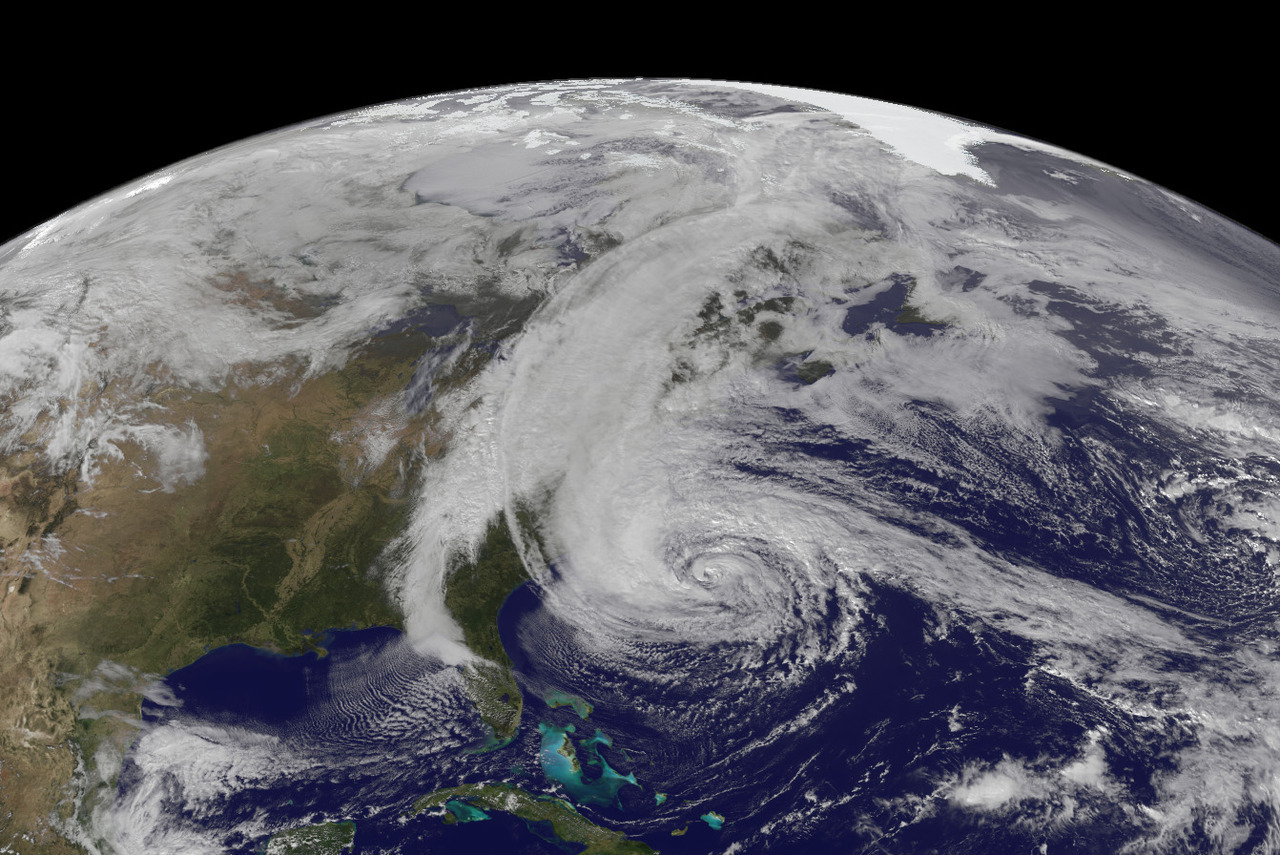
Today our thoughts are with the metropolis as Sandy's devastation becomes clear. The day after is always the hardest, I think - the adrenalin is gone, the insurance paperwork is out, and neighbors face the reality of work - normalcy - by Monday.

This is my least favorite day because it's when we turn our lives into dollars. How much will it cost? Who will pay? What amount can the government afford? Why rebuild [insert expensive thing] at all?


As always during emergencies, when things that we think are permanent or reliable are no longer so, communities solidify. I hope we can be that solid community for each other.

Over fifty reported deaths so far. Nurses carrying infants down nine floors in the dark. 80 destroyed homes. Landmarks and memories washed away.

Here in New Orleans we are enjoying a ridiculously beautiful week - cool winds, clear skies, and the smell of rarely-used fireplaces as everyone gets their costumes ready. How heavy can our hearts be for our neighbors whose suffering we have shared?

I encourage you to have interstate compassion. Continue to check online sources that carry your thoughts east to Gotham.

And whatever you do, do not let anyone reduce a person, a life, a community or a network of relationships, to a dollar amount. Compassion is realizing that everyone has has someone who they would move mountains for, and that moving mountains for each other is the business of a global community.

Monday, October 29, 2012

Interviews

You know that I've been writing about the evolution of spirituality and meaning. Lots of statistics, lots of theological research, lots of reading colleagues. But I've been a bit lax with interviews. No more!

Today I'm restarting interviews. Here are some of the questions I want to ask:

What are some things and activities that are important to you?

What motivates you to do those things?

 If you could do more of something, what would it be?

What prevents you from doing that?

 What I say "God" you think...

When I say "Religion" you think...


I hope these topics will lead to long, open conversations about how people find meaning in their lives, where religion fits into people's thoughts, and the role different rituals play.


What would you ask?  Use comments to reply, or just facebook me. I'd love to hear from you, even if we can't have a coffee in person.

Sunday, October 28, 2012

Sunday Prayer

I'm trying to pivot next week to some topics on money and humanity, which have been on my mind as Q and I figure out our budget. I was thinking of the prayer of St. Francis, but I prefer this similar prayer by Cesar Chavez. 

I like this one for two big reasons. For one, Chavez is someone we know. He worked near where we live, with people we know of. He is not an abstraction, a statue in a garden with little deer and birds around. He suffered in tangible ways, with tangible results.

Also, this Chavez prayer is more human somehow, I think. No mention of a heavenly lord or master. Dawkins could pray this, honestly, for the equality of persons, and the subjecthood of the planet.

Show me the suffering of the most miserable;
So I will know my people's plight.
Free me to pray for others;
For you are present in every person.
Help me take responsiblity for my own life;
So that I can feel free at last.
Grant me courage to serve others;
For in service there is true life.
Give me honesty and patience;
So that I can work with other workers.
Bring forth song and celebration;
So that the Spirit will be alive among us.
Let the Spirit fourish and grow;
So that we will never tire of the struggle.
Let us remember those who have died for justice;
For they have given us life.
Help us love even those who hate us;
So we can change the world.